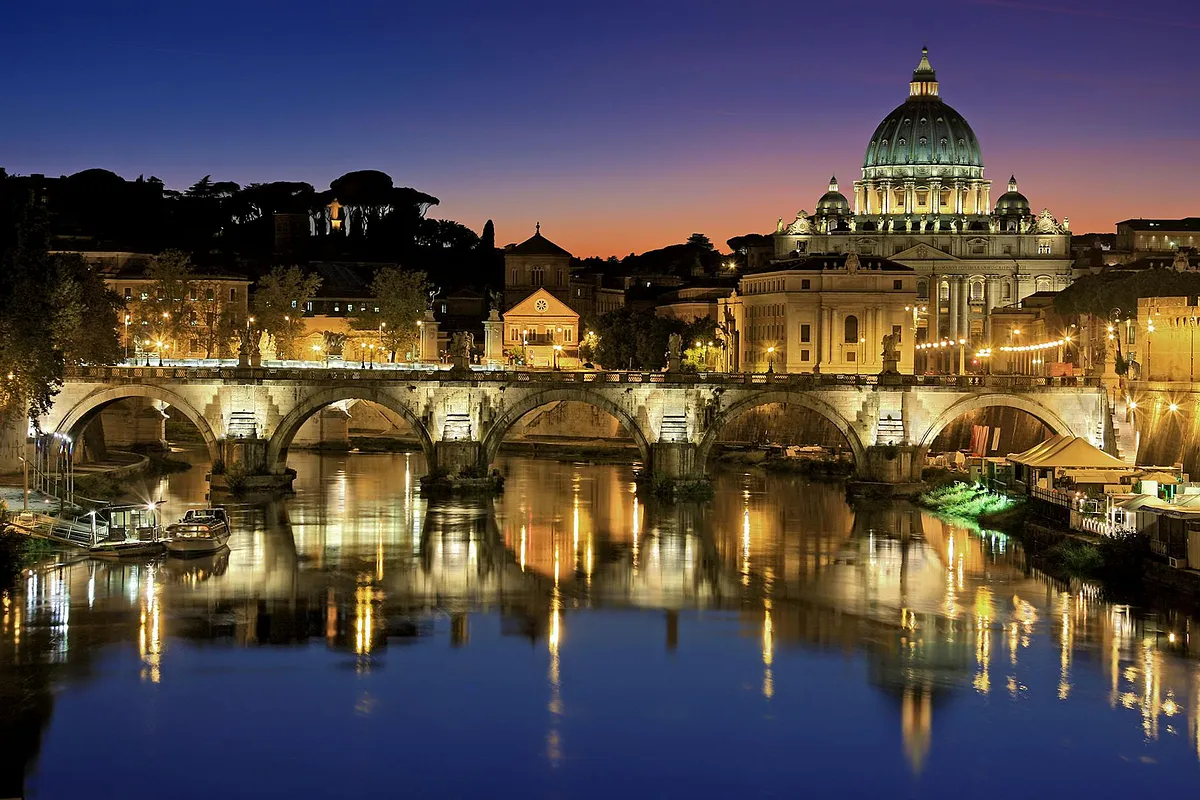
PATRICK ANSWERS: For the museums and Sistine Chapel, plan 2 to 3 hours. For St. Peter’s Basilica, 1 to 2 hours including security. For the full circuit - museums, Sistine, basilica, and dome - budget 4 to 5 hours. The real time thief isn’t the art, it’s the queues. Book ahead and you’ll save 1 to 3 hours.
The Vatican is not a single “sight” you tick off; it is a living nerve-centre of faith, art, and ceremony, and it runs on rhythms that most visitors only discover after losing an hour in a security queue. Pilgrims arrive with a prayer list and the quiet hope of touching the tomb of Peter; cultural travellers arrive with Michelangelo on the mind and a single day in Rome to make it count. Both groups share the same anxiety: crowds, strict dress expectations, and the fear of misjudging time. The good news is that the Vatican is predictable when you understand its choke points: basilica security, museum timed entries, and the long walk between entrances. In the sections below, I give clear, realistic time ranges, from a reverent basilica visit in 1-2 hours to a well-planned Museums-Sistine-Basilica circuit in 3-4, so you can plan with confidence, not wishful thinking.
Quick time answers: choose your Vatican “version” (1 hour to a full day)
The Vatican offers multiple experiences depending on your priorities. A basilica-only visit requires 1-2 hours including security (60-90 minutes at peak, faster at 7:00 opening or post-14:00). You will see the Pieta, Bernini’s baldachin, and the tomb of John Paul II, but you will miss the Sistine Chapel entirely. This suits pilgrims prioritising prayer over art, or those integrating the Vatican into a packed Roman day. Add the dome climb (EUR8-EUR10, 551 steps or lift-plus-stairs) and you need 2-3 hours total; the reward is unmatched views across Rome, but queues lengthen post-renovation and the climb is not suitable for those with mobility concerns.
A Museums and Sistine Chapel visit (without basilica access) takes 2.5-3 hours if you focus on the Raphael Rooms, Gallery of Maps, and the Chapel itself. You will miss St. Peter’s unless you walk 15-20 minutes around the walls to the basilica entrance and queue again. The most efficient option is a skip-the-line guided tour combining Museums, Sistine, and Basilica via the internal passage (EUR50+, 3-3.5 hours total). This saves 1-3 hours of queuing and grants direct basilica access without re-entering security. Families and art-focused visitors benefit most from this structure. For a full immersive day, add the Vatican Grottoes (free, beneath the basilica, 20-30 minutes) and the Papal Crypts tour (EUR7-EUR11, 30-60 minutes). Expect 5-6 hours total, with a meal break in Prati. After-hours tours (18:30 start, 2 hours, Raphael Rooms focus) suit those seeking near-empty galleries, though the Sistine Chapel remains moderately busy even then.
Patrick’s Tips:
- Book timed museum tickets 2-3 weeks ahead minimum - 3-6 months during Jubilee periods
- The basilica and museum entrances are a 15-20 minute walk apart - plan your route accordingly
- Arrive at 7:00 AM for the basilica or book an 8:00 AM museum slot for near-empty galleries
- The internal passage from the Sistine Chapel to St. Peter’s saves 1-3 hours of re-queuing
- Cap your museum visit based on your attention span, not your ambition
The hidden time thief: security lines, timed tickets, and the walk between entrances
The Vatican’s two main entrances, St. Peter’s Basilica and the Vatican Museums, are separated by a 15-20 minute walk around the Leonine Walls. This is not intuitive, and many visitors lose 30-40 minutes realising they must leave one queue, walk to Via della Conciliazione or Viale Vaticano, and join another. Security at the basilica is airport-grade (metal detectors, bag checks, dress code enforcement) and forms along the right colonnade of St. Peter’s Square. At peak hours (10:00-13:00, especially summer and Jubilee periods), waits reach 60-90 minutes; in extreme cases - Easter, Christmas, or Jubilee Sundays - lines stretch to 2-3 hours. The dress code (shoulders and knees covered, no hats inside) is non-negotiable; guards turn away dozens daily, and there are no on-site cover-ups for hire.
The Vatican Museums operate on timed entry (EUR17+ adult, book via museivaticani.va), and slots fill 2-3 weeks ahead in high season, 3-6 months during the extended Jubilee through 2026. Arriving “early” without a pre-booked ticket means joining the walk-up queue on Viale Vaticano, which can add 1-2 hours before you even purchase entry. Timed tickets mitigate this, but your slot is binding; miss it by 30 minutes and you forfeit entry. The museum entrance is 400 metres north of the basilica’s security line, and there is no shortcut. Plan your day with this geography in mind: if you visit the basilica first, you must walk back around to reach the museums, and vice versa, unless you book a guided tour with internal passage access.
Vatican Museums + Sistine Chapel: realistic timing inside the 9 miles of corridors
The Vatican Museums span 9 miles of corridors, and without a plan you will either rush or collapse from decision fatigue. A highlights-only pace (1.5-2 hours) covers the Pinecone Courtyard, Sphere within a Sphere sculpture, the Gallery of Maps (120 metres of 16th-century cartography), the Gallery of Tapestries, the Raphael Rooms (especially the School of Athens), and the Sistine Chapel. You will miss the Egyptian and Etruscan collections, the Borgia Apartments, and the modern religious art wing, but you will see what most visitors consider essential. A standard guided tour (2.5-3 hours) adds context to these stops and manages crowd flow; guides use earpieces to narrate whilst moving, which prevents bottlenecks.
Art lovers planning a deep visit (4-5 hours) should arrive at opening (9:00, or 8:00 for early-access tours) to linger in the Raphael Rooms and study the Sistine ceiling before the midday crush. The Chapel itself allows roughly 20 minutes per visitor; guards enforce silence and prohibit photography, and the density of bodies (21,000 daily visitors funnel through this single room) makes extended contemplation difficult. The Gallery of Maps and Tapestries are underrated for efficiency: they are visually stunning, less crowded than the Sistine, and offer natural rest points. After-hours tours (18:30 start) grant quieter access to the Raphael Rooms but do not eliminate Sistine crowding entirely, as multiple tour groups overlap.
For a full gallery-by-gallery breakdown and Friday evening strategy, see our Vatican Museums honest guide.
The great trade-off: is a skip-the-line guided tour worth it for time (and sanity)?
A skip-the-line guided tour saves 1-3 hours of queuing and typically costs EUR50-EUR59 for a 3-3.5 hour Museums-Sistine-Basilica package (museum ticket included; dome extra). Compare this to EUR17 for a self-guided museum ticket plus 1-2 hours in line, and the value is clear for anyone with limited time. Small-group tours (fewer than 12 participants) are the gold standard: they move faster, allow questions, and often include the internal passage from the Sistine Chapel directly into St. Peter’s Basilica, bypassing the second security queue entirely. This passage is not open to independent visitors, making guided access a structural advantage, not just a convenience.
Book via official resellers such as Viator or the Vatican’s own portal (museivaticani.va) to avoid scams; unofficial touts near the entrances charge EUR80+ for the same tours. During the extended Jubilee (through 2026), expect surcharges of EUR5-EUR10 on peak dates (Sundays, holy days) and reduced availability. Group discounts (10-20% for parties of four or more) apply on some platforms, but require booking 3-6 months ahead. Private tours (EUR150-EUR300 for up to six people) offer maximum flexibility but are unnecessary unless you have specific research interests or mobility needs. For most visitors, a semi-private tour under 12 people delivers the best balance of cost, time saved, and educational depth.
Patrick’s Pick: The Vatican Museums and Sistine Chapel Skip-the-Line Tour is the best value for time-conscious visitors. Direct entry, guided highlights, earpiece commentary, and the internal passage to St. Peter’s. Around EUR50-59 and worth every cent compared to standing in line for two hours.
St. Peter’s Basilica in 1-3 hours: what to see, what to skip, and when Wednesday changes everything
St. Peter’s Basilica opens daily at 7:00 and closes at 19:10 (last entry 18:30), with free admission. Wednesday mornings (until roughly 12:00) see partial closures or restricted access due to Papal Audiences in St. Peter’s Square; if you are visiting midweek, plan for a post-lunch basilica slot or confirm via basilicasanpietro.va the evening before. The dress code is enforced at the door: shoulders and knees covered, no shorts, no sleeveless tops. Security queues are shortest at 7:00 opening or after 14:00, when tour groups thin.
Inside, prioritise Michelangelo’s Pieta (right aisle, behind glass since a 1972 attack), Bernini’s bronze baldachin over the papal altar, and the tomb of St. Peter beneath the Confession. The basilica’s scale - 218 metres long, 136 metres tall at the dome - makes it easy to miss details; the floor markers comparing St. Peter’s to other great churches (St. Paul’s, Hagia Sophia) offer useful perspective. The Vatican Grottoes (free, entrance inside the basilica, exit outside) house papal tombs including John Paul II and Benedict XV; allow 20-30 minutes. The dome climb (EUR8 lift to terrace, EUR6 stairs only) adds 45-60 minutes and 320 steps after the lift; the terrace view alone justifies the effort, but the final spiral to the lantern is claustrophobic. Queues for the dome form separately, to the right of the basilica facade, and lengthen after 10:00.
Patrick’s Tip: If you only have time for one thing inside St. Peter’s, go straight to the Pieta. It’s immediately to your right as you enter. Michelangelo carved it at twenty-four and it remains the most technically perfect sculpture in Rome. Everything else is negotiable.
Best time slots by season (including Jubilee 2025-2026): how to avoid the daily peak
The Vatican’s daily rhythm peaks between 10:00 and 13:00, when tour groups, cruise passengers, and walk-ups converge. Arrive at 7:00-9:00 for the basilica or book an 8:00-9:00 early-access museum tour to experience near-empty galleries. Post-14:00 slots work well for the basilica (security lines drop by half), though museum crowds remain steady until 16:00. After-hours museum tours (18:30 start, April-October only) offer the quietest experience but cost EUR60-EUR80 and skip the basilica entirely unless you return the next day.
Seasonally, avoid July-August (heat, 30,000+ daily visitors) and the extended Jubilee peaks (Easter 2025-2026, Christmas 2025). Late September through November and February-March offer the best balance of weather and manageable crowds, though the Jubilee will inflate numbers by 20-50% even in shoulder months. Book museum tickets and tours 3-6 months ahead for Jubilee dates; last-minute availability is rare. Wednesday mornings remain problematic due to Papal Audiences, and Sunday mornings see heightened security for papal blessings (12:00 Angelus). If your Rome itinerary is fixed, prioritise a Monday, Thursday, or Friday for maximum flexibility.
If you’re planning a full day, our one-day Vatican itinerary maps out the exact sequence from 6:30 AM to 5:00 PM.
Plan your day like a Vatican insider: transport, where to stay nearby, and a practical meal break in Prati
Metro Line A (Ottaviano or Cipro stops) places you 5-10 minutes’ walk from the Vatican entrances; buses 49, 23, and 81 from Termini also serve Piazza del Risorgimento. Staying in Prati (the neighbourhood north of the Vatican) cuts morning travel to zero and offers authentic dining without tourist-trap pricing. Borgo Pio, the medieval lane between Castel Sant’Angelo and St. Peter’s, is even closer but pricier. Trastevere, across the Tiber, is a 20-minute walk or short bus ride and offers lively evening options, though it adds logistical friction to early starts.
A practical survival schedule: book a 9:00 museum tour (3 hours, ending 12:00), walk to Prati for lunch at Hostaria dei Bastioni (EUR15-EUR25 per person, authentic cacio e pepe and suppli, Via Leone IV), then return for a 14:30 basilica visit (1.5 hours including dome). This structure avoids midday heat, splits the day into digestible segments, and uses the meal break to rest before the basilica’s emotional weight. For a mid-range dinner, Amalfi (Via degli Scipioni, EUR30-EUR50 per person, seafood-focused) is five minutes from Ottaviano Metro. Budget an extra hour if you plan to visit the Grottoes or Crypts, and confirm Wednesday closures the night before via the official basilica site. The Vatican rewards preparation, not spontaneity.
Frequently Asked Questions
- How long does it take to visit the Vatican Museums and Sistine Chapel?
- A highlights-only visit takes 1.5 to 2 hours. A standard guided tour runs 2.5 to 3 hours. A deep visit for art lovers takes 4 to 5 hours. Cap it based on your attention span, not ambition.
- How long is the queue for the Vatican Museums?
- With a pre-booked timed ticket, 15 to 30 minutes for security. Without one, the walk-up queue on Viale Vaticano can add 1 to 2 hours before you even purchase entry. Book ahead.
- How long does the St. Peter's Basilica security queue take?
- At peak hours (10:00 to 13:00), waits reach 60 to 90 minutes. At 7:00 AM opening or after 14:00, it drops to 15 to 30 minutes. During Easter, Christmas, or Jubilee Sundays, lines can stretch to 2 to 3 hours.
- How long does the dome climb take?
- Allow 45 to 60 minutes total. The lift takes you to the first terrace, then it's 320 steps to the top. The final spiral is narrow and claustrophobic but the 360-degree view of Rome is worth it.
- Can you do the Vatican Museums and St. Peter's Basilica in one day?
- Yes. A guided skip-the-line tour covering museums, Sistine Chapel, and basilica takes 3 to 3.5 hours via the internal passage. Add the dome climb and you need 4 to 5 hours total.