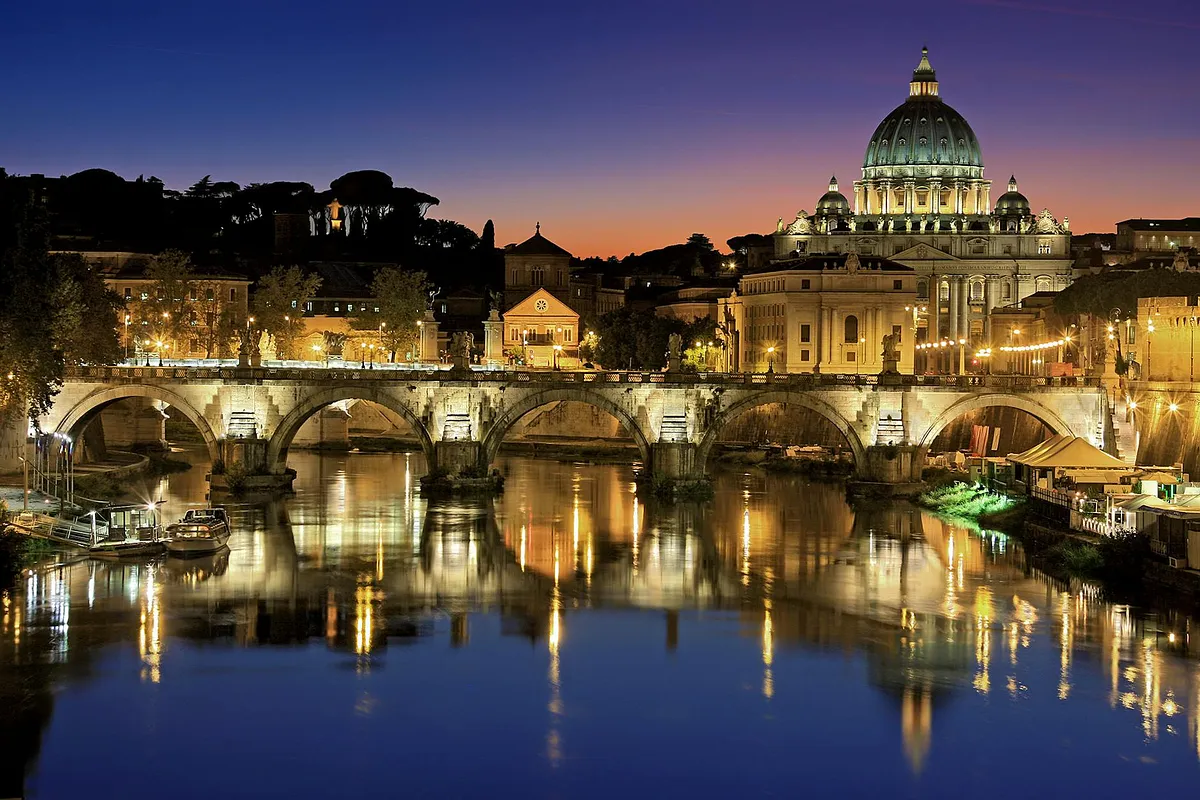
PATRICK ANSWERS: Yes, you can tour the Vatican entirely on your own. Book a timed ticket on museivaticani.va at least 60 days ahead, grab an audio guide for EUR8, and follow a focused route: Pinacoteca, Raphael Rooms, Sistine Chapel. Cap it at 3 hours. The one thing you lose without a guide is the internal passage from the Sistine Chapel to St. Peter’s - that’s typically guided-tour only.
You do not need a guide to enter the Vatican, but you do need a plan. The Vatican Museums operate on timed tickets checked against your passport, whilst St. Peter’s Basilica remains free entry but funnels all visitors through airport-grade security. A guide offers context and queue management, but the infrastructure now exists for the disciplined solo visitor to navigate both sites with dignity and efficiency. What follows is not permission to wander aimlessly through Christendom’s greatest treasury, but a structured approach to self-guided access that respects both the sacred space and your finite time in Rome.
What “self-guided” actually means at the Vatican (and what it doesn’t)
The Vatican is not a single ticketed attraction. It is three distinct zones, each with its own entry protocol. The Vatican Museums require a timed ticket (EUR20 standard admission plus EUR4 online booking fee; reduced admission EUR10 plus EUR5 online fee). This ticket grants you access to 54 galleries, the Raphael Rooms, and the Sistine Chapel. The Sistine Chapel sits at the end of the museum route; you cannot visit it separately. St. Peter’s Basilica is entirely free to enter, but you must queue through security screening regardless of whether you hold a museum ticket. These are not connected experiences unless you book a specific type of guided tour that includes the internal shortcut from the Sistine Chapel directly into the Basilica - a route generally unavailable to standard self-guided visitors.
Self-guided means you control your pace and your focus. You may linger before Caravaggio’s Entombment in the Pinacoteca, or sit in silence beneath the Sistine Chapel’s Last Judgement whilst others photograph the ceiling. You may pray at the tomb of John Paul II without a guide narrating the marble. But self-guided does not mean unstructured. The Vatican Museums span more than five miles of corridors. Without a clear route, you will exhaust yourself before reaching the Sistine Chapel. An audio guide (EUR8 additional) provides essential context: why the School of Athens matters to Renaissance theology, why the Laocoon sculpture influenced Michelangelo’s understanding of human suffering. It will not navigate the crowd dynamics for you. That is your responsibility.
Timed tickets: the booking window, the rules, and what happens if you’re late
Book your Vatican Museums ticket 60 to 90 days in advance through museivaticani.va. During peak season, Easter through October, extend that window to two or three months. The EUR4 online booking fee is not a surcharge; it is the cost of certainty. Without it, you join the ticket-purchase queue, which regularly exceeds three hours in summer. Timed-entry tickets eliminate that queue, but they do not bypass security screening. Every visitor, regardless of ticket type, passes through metal detectors and bag checks. Arrive 30 minutes before your timed slot to account for this.
Your slot is binding. Miss it by 30 minutes and you forfeit your entry; the Vatican enforces punctuality to manage crowd density. Late arrivals are turned away without refund. If your cruise docks at Civitavecchia at 8:00 AM, a 10:00 AM ticket is logistically impossible; book for 1:00 PM and accept that you will see Rome in reverse order.
The confusion around “skip-the-line” tickets is deliberate. Marketing companies charge EUR45 to EUR85 for group tours advertised as bypassing queues, but the only queue they skip is the ticket-purchase line - the same benefit your EUR24 online booking provides. The security queue is mandatory for all. If you value independent movement and are comfortable navigating museums without narration, the standard online ticket is sufficient.
Patrick’s Tips:
- Book 60-90 days ahead on museivaticani.va; 2-3 months during peak season
- Arrive 30 minutes before your timed slot for security screening
- Your slot is binding - miss it by 30 minutes and you forfeit without refund
- The EUR4 booking fee is the cheapest queue insurance available
- Grab the EUR8 audio guide inside - it provides context the museum labels don’t
The self-guided route that works: Pinacoteca first, Sistine Chapel before midday
The Vatican Museums span seven kilometres of corridors and contain enough art to justify a doctorate. A self-guided visit demands ruthless prioritisation. Upon entry, collect a paper map or download the official app, which offers room-by-room audio commentary in multiple languages.
Your route should follow this sequence: enter via the Viale Vaticano gate, ascend immediately to the Pinacoteca (picture gallery) to avoid crowds, then proceed through the Egyptian and Etruscan collections whilst others bottleneck at the Raphael Rooms. The Raphael Rooms themselves, particularly the School of Athens fresco, warrant 30 minutes of contemplation. From there, move directly to the Sistine Chapel before midday, when tour groups descend en masse. The Chapel prohibits photography and enforces silence, though guards must constantly remind visitors of both rules. Michelangelo’s ceiling and Last Judgement deserve at least 20 minutes of seated observation. The benches along the walls fill quickly; claim one early.
For the full gallery-by-gallery breakdown with Friday evening strategy, see our Vatican Museums honest guide. For time budgeting, our guide to how long the Vatican takes covers every visit type.
The crowding truth: when to go if you want reverence, not gridlock
The 8:00 AM entry slot is the only time the Vatican Museums approach quiet. By 9:30 AM, the Sistine Chapel is standing-room only. By 11:00 AM, the Raphael Rooms are gridlocked. If you are a pilgrim seeking contemplative space, or a photographer hoping for clear sightlines, the first slot is non-negotiable. Book it months ahead; it fills quickly.
Wednesday mornings present a unique dynamic. Papal General Audiences occur in St. Peter’s Square at 9:30 AM, drawing thousands of pilgrims away from the museums. If you are not attending the audience, Wednesday morning museum visits can be marginally quieter, though this advantage disappears by midday.
Plan for 3 to 4 hours inside the museums if you intend to see the major works properly. Rest every 30 minutes in the designated courtyards. The artistic density is overwhelming. Visitors who attempt to absorb everything in one unbroken march report exhaustion and diminished retention. The Vatican is not a race. It is a pilgrimage through two millennia of Christian art and history. Treat it accordingly.
The “shortcut” truth: Sistine Chapel to St. Peter’s Basilica
The internal passage connecting the Sistine Chapel to St. Peter’s Basilica is real, but it is generally not accessible to self-guided visitors. It operates for official third-party tours that explicitly include St. Peter’s Basilica in their itinerary. Tours booked through the Vatican Museums official website do not always include this access. Tours marketed as “Sistine Chapel experiences” often exclude the Basilica entirely, meaning you exit the museums onto Viale Vaticano and must walk 15-20 minutes around the walls to join the public security queue at St. Peter’s.
Verify shortcut inclusion before booking any tour. Contact the operator directly and ask: “Does this tour include the internal passage from the Sistine Chapel to St. Peter’s Basilica?” If the answer is vague, assume the shortcut is not included. This is the single most common source of visitor frustration, and it is entirely avoidable with explicit confirmation.
Patrick’s Tip: If the Sistine-to-Basilica shortcut matters to you, a guided tour is worth the EUR7-17 premium over self-guided. It’s not just about the narration - it’s about saving 40+ minutes of walking and re-queuing. See our guided vs self-guided comparison for the full cost breakdown.
St. Peter’s Basilica on your own: free entry, strict security, and the dome
St. Peter’s Basilica charges no admission. You queue through security at the Basilica entrance on the south side of St. Peter’s Square, separate from the museum entrance on Viale Vaticano. Budget 30-45 minutes for the queue during peak hours; arrive before 8:00 AM or after 3:00 PM for the shortest waits.
The dome climb requires a separate ticket (EUR8-EUR10). The climb involves 320 steps after the lift stops, rising through the narrow interior of the dome to the lantern platform. The views across Rome are unmatched, but the final spiral staircase is claustrophobic and unsuitable for anyone with mobility issues or severe claustrophobia. Arrive at opening to avoid the queue, which can add 90 minutes by late morning.
Dress code and prohibited items: the rules that end self-guided days early
The Vatican dress code is enforced without exception at every entrance. Shoulders and knees covered. No hats inside sacred spaces. Guards turn you away without warnings or second chances. Clothing rental stalls near the entrances charge EUR15-20 for substandard wraps; bring your own lightweight cardigan or pashmina.
Large backpacks, umbrellas, knives, and glass containers are prohibited. Storage facilities charge EUR5-8 per item. Travel light: a small crossbody bag is sufficient for water, identification (carry your passport), and a phone. Holy Week disrupts normal access patterns; verify the official Vatican calendar before booking if travelling in late March or April.
When self-guided falls short (and a guide becomes worth it)
A guide becomes necessary under specific conditions: if you have mobility limitations that require assistance navigating staircases, if you are travelling with children who need structured engagement, or if you possess no baseline knowledge of Renaissance art or Church history. The Vatican is not a theme park; it assumes a degree of cultural literacy that many visitors lack. A competent guide transforms the Raphael Rooms from pretty frescoes into a theological argument rendered in paint. Without that context, you risk reducing the experience to a photo checklist.
A self-guided visit with an audio guide costs EUR28 per person (EUR24 ticket plus EUR4 audio guide rental). A group guided tour costs EUR35-45. The EUR7-17 difference buys you live narration that adapts to group questions, usually the Sistine-to-Basilica shortcut, and a guide who navigates crowd flow strategically. For first-time visitors unfamiliar with Renaissance iconography, the context provided by a trained guide transforms the experience from visual spectacle to intellectual and spiritual engagement.
For pilgrims, the calculation is different. If your goal is prayerful presence rather than art-historical education, a self-guided visit allows you to move at the pace of contemplation, not commentary. You may kneel before the Pieta without a guide explaining Michelangelo’s technique. This is not possible in a guided group.
Patrick’s Pick: If you’re going self-guided, the standard EUR24 online ticket plus the EUR8 audio guide is all you need. But if you want the Sistine-to-Basilica shortcut, the Vatican Museums, Sistine Chapel, and St. Peter’s Basilica Tour is the one that explicitly includes it. Around EUR50.
Frequently Asked Questions
- Can you visit the Vatican Museums without a guide?
- Yes. You need a timed ticket booked via museivaticani.va (EUR20 plus EUR4 booking fee). An audio guide adds EUR8 and provides essential context. You control your pace and focus.
- Is the shortcut from the Sistine Chapel to St. Peter's Basilica available to self-guided visitors?
- Generally no. The internal passage is typically available only to guided tour groups. Self-guided visitors exit onto Viale Vaticano and must walk 15-20 minutes to re-queue at the basilica. Always verify with your tour operator if this matters to you.
- How far in advance should I book Vatican Museum tickets?
- 60 to 90 days ahead for most of the year. During peak season (April-October), extend to 2-3 months. Slots fill fast and your timed entry is binding - miss it by 30 minutes and you forfeit without refund.
- What is the best route through the Vatican Museums on your own?
- Pinacoteca first (while others bottleneck at the Raphael Rooms), then Egyptian and Etruscan collections, Raphael Rooms, and finally the Sistine Chapel before midday. Claim a bench along the chapel walls early.
- When does a guide become necessary?
- If you have mobility limitations, are travelling with children who need structured engagement, or have no baseline knowledge of Renaissance art or Church history. The EUR7-17 difference between self-guided and a group tour buys live narration, crowd management, and usually the Sistine-to-Basilica shortcut.